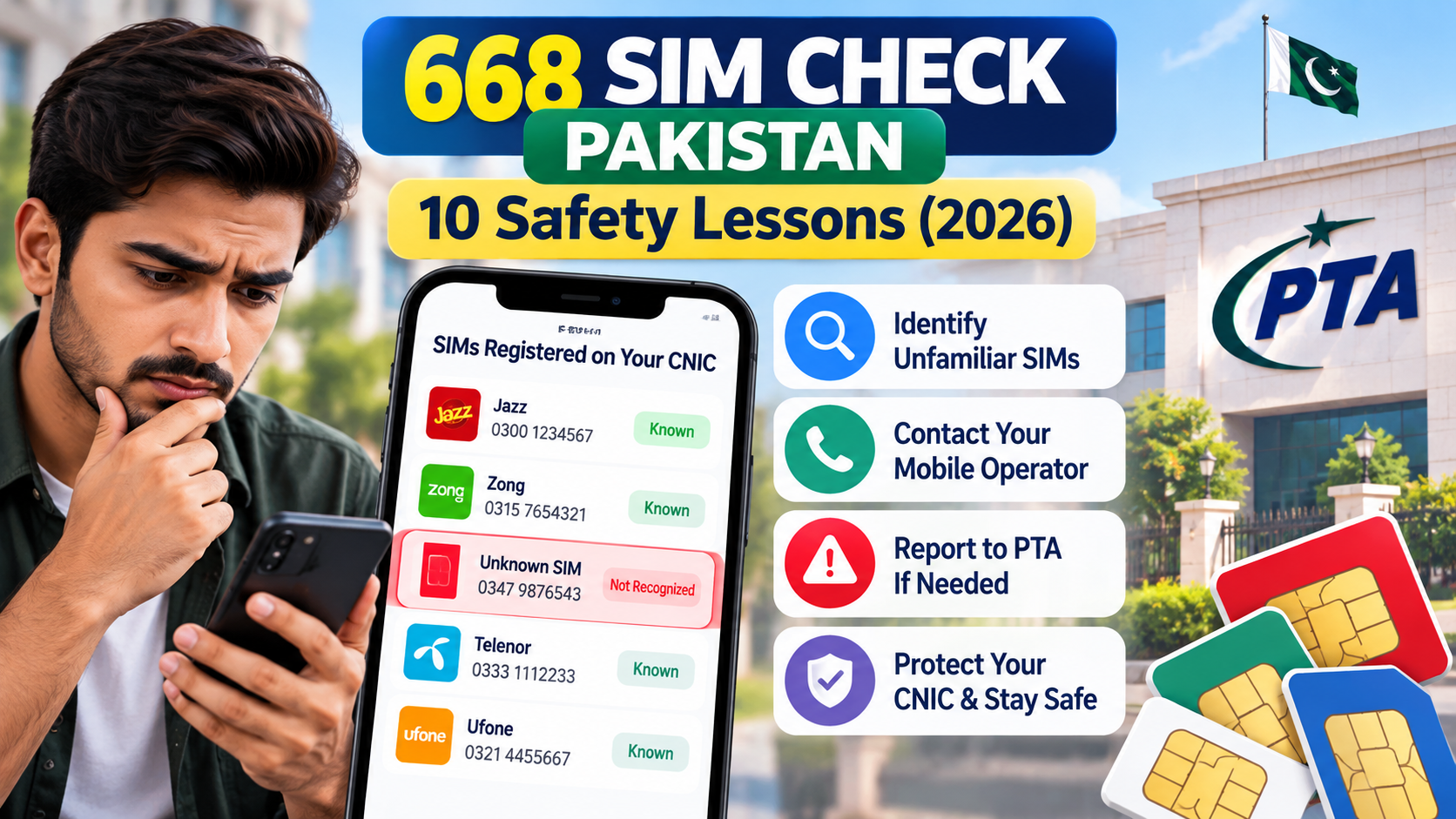
668 SIM Check Pakistan is a useful starting point for reviewing SIM registrations associated with your own CNIC. If you discover an unfamiliar entry, this guide explains how to verify the information, recognise possible warning signs, and contact the relevant mobile operator through official channels.
A mobile SIM is more than a way to make calls or send messages. It can be connected to banking alerts, mobile wallets, personal accounts, business communications and identity-verification processes. That is why understanding which SIM registrations are associated with your own Computerised National Identity Card (CNIC) is an important part of personal digital safety.
In Pakistan, the Pakistan Telecommunication Authority (PTA) provides the SIM Information System at cnic.sims.pk. Consumers can also use the 668 SMS service to check their own SIM registration information. These services help people review their records and identify discrepancies that may need further investigation.
But what happens when an unexpected SIM registration appears? What if you have stopped using an old number, live abroad, manage a business, or discover a possible problem only after several months?
The answer depends on the circumstances. An unfamiliar entry does not automatically prove identity theft, financial fraud or deliberate misuse. It does, however, provide a reason to verify the information and contact the relevant mobile operator if the registration cannot be explained.
This guide explores ten illustrative SIM safety scenarios, explains the risks each one represents, and shows how readers can respond using appropriate self-check and complaint procedures. These scenarios are educational examples, not verified accounts of particular people or guaranteed fraud-prevention outcomes.
Why 668 SIM Checks Can Be an Important Safety Habit
The purpose of a SIM registration check is straightforward: understand the registration information associated with your own identity and investigate anything that does not match your records.
Consider someone who has used several mobile networks over the years. They may remember their current number but forget an older connection. Alternatively, they may have replaced a SIM, changed operators or stopped using a number without remembering every detail of the registration process.
An unfamiliar result could therefore have several explanations. The check itself does not establish which explanation is correct.
The practical value lies in identifying a discrepancy early enough to ask questions, preserve relevant information and follow the appropriate procedure.
A sensible personal verification routine involves four steps:
- Review your own registration information through an official channel.
- Compare the result with the SIMs and connections you recognise.
- Ask the relevant operator to investigate entries you cannot explain.
- Keep a record of your complaint and follow up through the appropriate channel.
PTA advises consumers to ensure that SIMs are registered in their own names and to approach the relevant service provider if a SIM appears to have been issued without their knowledge or consent. <Cite refs={[“turn503150search0”]}/>
Scenario 1: An Unknown SIM Appears Against Your CNIC
Imagine checking your registration information and noticing that one mobile operator has a connection you do not recognise.
Your first thought might be that someone has used your CNIC without permission. That is a legitimate concern to investigate, but it is not yet a confirmed conclusion.
What could explain the unfamiliar entry?
You might have forgotten an older connection, misunderstood a registration record, or encountered a discrepancy that requires the operator to review its information. It is also possible that a SIM was registered without your knowledge.
The available result alone cannot tell you which explanation is correct.
What should you do first?
Start by noting the network associated with the entry and the date of your check. Review your own records, including any old SIM packaging, operator messages or documents that could help you recognise the connection.
If the entry remains unfamiliar, contact the relevant operator through its official customer support channel or visit an authorised service centre. Explain that you are reviewing registrations against your own CNIC and need help verifying an entry you do not recognise.
Ask the operator to explain its formal dispute procedure and whether any additional identity verification is required.
Keep the complaint reference, the date you contacted the operator and the response you received.
Key lesson: An unknown SIM is a warning sign that deserves investigation. It is not, by itself, proof of who registered the SIM or why.
Scenario 2: Unexpected Mobile Service Problems Raise a SIM-Swap Concern
A person may suddenly lose mobile service, stop receiving expected messages or receive an unexpected notification about a SIM replacement.
These signs can be worrying because mobile numbers are sometimes used for account recovery and security notifications. However, network outages, device problems and ordinary SIM faults can also interrupt service.
A SIM-swap concern should therefore be assessed separately from an ordinary SIM registration check.
How to distinguish a registration concern from a service problem
If your phone loses service unexpectedly, check whether there is a general network issue and restart your device if appropriate. If the problem persists, contact your operator through an official channel.
Ask whether a SIM replacement or other account change has been recorded against your number. Do not assume that an unfamiliar entry in a CNIC check means your existing number has been taken over.
How to Use 668 SIM Check Pakistan Safely
If you also receive unexpected account-recovery messages or discover changes you did not authorise, contact the affected account provider. Where financial accounts may be involved, contact your bank or wallet provider promptly.
Never disclose one-time passwords, account PINs or recovery codes to a caller claiming to be from a telecom company.
Key lesson: Investigate unexpected SIM registrations, loss of service and suspicious account activity as related but distinct problems.
Scenario 3: An Old Connection Has Been Forgotten
People frequently change mobile numbers, devices and operators. An older SIM may remain part of their registration history or create questions when they review their records.
The important issue is not simply whether the number is old. It is whether the registration is correctly associated with you and whether any action is required.
Conduct a personal SIM audit
Make a private list of the connections you currently use. Include personal numbers and any other connections you legitimately manage.
Next, consider older numbers you remember using. If an entry cannot be matched to a known connection, ask the operator to verify its status.
If you no longer need a connection, request the appropriate closure or disowning procedure from the operator. Do not assume that removing the SIM card from a phone automatically ends the registration.
Similarly, giving a SIM to another person does not necessarily complete a valid transfer of registration. Follow the operator’s authorised procedure instead of relying on informal arrangements.
What records should you keep?
Save relevant confirmation messages, complaint references and any official response explaining the status of the connection. Keep these records securely rather than publishing them online.
Key lesson: A periodic review of your own SIM registrations can help you identify forgotten connections and resolve administrative issues.
Scenario 4: Overseas Pakistanis Need a Practical Verification Plan
Pakistanis living abroad may continue using Pakistani mobile connections for family communications, banking notifications or other services. If a registration looks unfamiliar, visiting a local service centre in Pakistan may not be immediately possible.
Being overseas does not remove the need to investigate a discrepancy, but the available process may depend on the operator and the person’s circumstances.
How to proceed from abroad
Start with the official PTA SIM Information System and follow its current instructions. The portal includes an identification option for foreign nationals; users should select the option appropriate to their own identification document. <Cite refs={[“turn503150search8”]}/>
If the result raises a concern, contact the relevant mobile operator through its published support channels. Explain that you are abroad and ask what identity-verification documents and complaint procedures it accepts.
Do not assume that a relative can complete every formal process on your behalf. Ask the operator whether an authorised representative is permitted and what documentation would be required.
If a family member assists with communication, share only the information needed for that task. Avoid giving anyone your account passwords, banking PINs or one-time verification codes.
Keep a written record of correspondence and complaint references so that you can follow up even when you cannot visit in person.
Key lesson: A clear remote communication plan can make it easier to investigate a registration issue without unnecessarily exposing personal information.
Scenario 5: Several Unfamiliar Registrations Appear Together
Finding multiple SIM registrations you cannot explain may increase concern, especially if they involve more than one network.
However, several unfamiliar entries do not automatically establish that an organised fraud operation has occurred. The reason for each entry still needs to be verified.
How to organise the investigation
Create a private record of each entry that needs clarification. Note the network, the date you checked the information and any relevant details you already know.
Contact the relevant operators and ask whether they can investigate the entries through their formal procedures. If different operators are involved, you may need separate complaints.
If you believe your identity has been misused, describe the circumstances to the appropriate official complaint-handling authority. State what you observed and what the operators confirmed. Do not speculate about a suspected person or organisation without evidence.
Avoid posting your complete CNIC, phone numbers or registration results on public forums. Publicly sharing such information can create additional privacy risks without helping the operator verify the record.
Key lesson: Organised documentation makes a complaint easier to explain and follow up, while keeping conclusions tied to verified facts.
Scenario 6: An Unknown SIM Creates Concern About Banking or Mobile Wallets
Mobile numbers may be used for banking alerts, wallet notifications and account recovery. It is therefore understandable to worry that an unfamiliar SIM registration could be connected to financial misuse.
But the appearance of an unknown SIM does not prove that a bank account, wallet or loan application has been compromised.
Check the relevant accounts separately
Review your own banking and wallet activity for transactions, login alerts, recovery requests or account changes you do not recognise.
If you discover suspicious activity, contact the relevant financial institution using its official app, website or published customer-support channel. Explain the specific activity and ask what protective measures are appropriate.
At the same time, continue investigating the SIM registration with the mobile operator. The two organisations may need different information to review their respective records.
Do not follow unsolicited links claiming to show your financial risk score or reveal whether someone has taken a loan in your name. Use the provider’s official channels instead.
If no financial activity appears suspicious, you should still resolve the SIM registration discrepancy rather than assuming it will correct itself.
Key lesson: Treat an unknown SIM as a reason to review account security, not as proof that financial fraud has already happened.
Scenario 7: You Discover a Registration Problem Months Later
Sometimes people check their SIM registrations only after receiving a warning or hearing about identity misuse. They may then notice an entry they cannot explain and worry that too much time has passed to do anything.
The age of an entry alone does not determine whether an operator can investigate it or what action is possible.
How to handle an older discrepancy
Record the date you discovered the issue. Gather any relevant material already available to you, such as old operator messages, earlier complaints or documents relating to the connection.
Contact the operator and ask it to review the registration. Explain honestly that you do not know when the discrepancy began if that is the case.
If the operator identifies a potential issue, follow its instructions for submitting a formal dispute. If you suspect identity misuse, ask which additional reporting channel is appropriate.
Do not invent dates, alter messages or create unsupported claims to make a complaint appear more serious.
Retain the complaint reference and request an update according to the stated process.
Key lesson: Even when you discover an issue late, a factual and well-documented complaint is more useful than speculation.
Scenario 8: Helping an Older Relative Review Their SIM Registrations
Some family members may not know how SIM registration checks work or may find online services difficult to navigate. Helping them understand the process can improve their confidence and awareness.
However, family relationships do not automatically provide permission to access another person’s private identity information.
Make the process safe and respectful
Explain the purpose of the check and ask whether the person wants assistance. Use the official service and let them review the result themselves where possible.
If an entry is unfamiliar, help them contact the relevant operator if they request support. Keep any complaint documents private and share them only with the authorised organisation handling the matter.
This is also a useful opportunity to explain basic security habits:
- Never share one-time passwords or account PINs with callers.
- Be cautious about unsolicited requests for CNIC photographs.
- Do not trust websites promising private subscriber information.
- Verify unexpected payment requests independently.
- Keep complaint references and official responses secure.
A clean check can be reassuring, but it does not guarantee that a person will never experience future identity or account-security problems.
Key lesson: Good digital-safety support combines practical help, informed consent and respect for privacy.
Scenario 9: Buying a Used Phone With an Unclear SIM Arrangement
A second-hand handset may be sold with accessories or an old SIM. Buyers should understand that owning a physical phone is different from being the registered subscriber of a mobile connection.
A seller’s possession of a SIM does not establish that they are authorised to transfer its registration.
What should a buyer confirm?
Ask the seller to remove their personal accounts and SIM from the device. If a mobile connection is part of the arrangement, confirm with the operator what registration or transfer process is permitted.
Do not agree to use a connection that remains registered to an unrelated person simply because the seller says it is convenient.
If the registration cannot be confirmed or transferred through the appropriate process, arrange your own connection through an authorised operator channel.
Before using a second-hand phone, also consider resetting the device securely and removing any accounts that belong to the previous owner.
Key lesson: Treat the handset, SIM card and subscriber registration as separate matters. A legitimate phone purchase does not automatically transfer mobile registration.
Scenario 10: Businesses Need Clear SIM Registration Records
Small businesses may use mobile connections for customer support, delivery coordination, staff communication or payment notifications. When employees change roles or leave, unclear records can make it difficult to determine who is responsible for a connection.
An entry associated with an employee’s CNIC does not automatically establish fraud. The business needs to understand whether the arrangement is authorised and whether it complies with the operator’s applicable requirements.
Establish a responsible SIM-management process
Maintain an inventory of business-related mobile connections, including their purpose, responsible person, operator and current status.
When staff leave or responsibilities change, review the connections and access permissions affected by that change. Use the operator’s authorised procedures to update, transfer or close connections where appropriate.
Do not inspect employees’ personal CNIC records without a legitimate reason, appropriate consent and a lawful basis. A business review should focus on authorised company connections, not unnecessary access to private information.
Where corporate registration or tax-related requirements are unclear, confirm the applicable procedure directly with the operator or relevant official authority.
Key lesson: Clear ownership records and a consistent handover process reduce confusion and help organisations address genuine discrepancies.
The Deeper Lessons Behind These Scenarios
Although these ten examples cover different circumstances, they share several important principles.
1. Verification should come before accusation
An unfamiliar entry tells you that something needs clarification. It does not independently identify the person responsible or establish criminal intent.
Ask the operator to verify the registration and explain what its records show.
2. Evidence is more useful than assumptions
Dates, complaint references, official responses and relevant account alerts help establish what happened. Keep these records accurate and secure.
Do not rely on rumours or anonymous online claims to decide who is responsible.
3. Early action can help limit exposure
Promptly investigating a concern may help you identify the appropriate protective steps sooner. It cannot guarantee that fraud will be prevented, but leaving an unexplained issue unattended provides little benefit.
4. Different problems require different organisations
A mobile operator handles questions about its SIM registration records. A bank investigates activity on its financial accounts. A regulatory complaint channel may be appropriate when a service issue remains unresolved. Suspected criminal activity may require a separate official report.
Contact the organisation responsible for the specific issue rather than assuming that one complaint automatically resolves every aspect of the problem.
5. Personal information must remain protected
Use official services for your own SIM registration checks. Avoid uploading CNIC details to unfamiliar websites that promise private subscriber information, and do not publish sensitive records to seek informal help.
6. A clean result is a snapshot, not a lifetime guarantee
A result reflects the information available through the service at that time. Continue using sensible account-security practices and review your records periodically.
How to Check Your Own SIM Registrations in Pakistan

The PTA SIM Information System is available at:
Official portal: https://cnic.sims.pk/
Follow the instructions displayed on the portal and provide only the information required for your own check. Foreign nationals should review the portal’s Foreign ID option and use the identification method applicable to them.
PTA also advises consumers that they can send their CNIC number without dashes to 668 to check SIM registration information. Charges may apply, so confirm the current instructions and charges before sending an SMS. <Cite refs={[“turn503150search0″,”turn503150search8”]}/>
If the portal or SMS service does not respond, do not interpret a failed request as proof that no SIMs are registered or that fraud has occurred. Try the official channel again when appropriate and contact the operator if you need help interpreting a result.
Remember that a registration-count service is not the same as a public database of subscriber names and phone numbers. If you need to identify a specific unfamiliar connection associated with your own records, ask the relevant operator to explain its verification procedure.
What to Do If You Find an Unknown SIM
If you discover a registration you cannot recognise, follow this practical sequence:
- Review the entry: Check whether it could relate to an old or forgotten connection.
- Contact the operator: Explain that the entry appears against your CNIC and request verification.
- Ask about the dispute procedure: Confirm what documents or identity checks are required.
- Record the complaint: Save the date, reference number and response.
- Escalate if necessary: If the issue remains unresolved, consult the official PTA complaint channel.
- Protect affected accounts: If you notice suspicious banking or wallet activity, report it separately to the relevant provider.
- Follow up: Use the complaint reference to request an update and retain the final response.
Do not confront a suspected individual based only on an unfamiliar registration. Allow the authorised organisations to examine the available evidence.
Frequently Asked Questions
Are these ten scenarios confirmed real-life success stories?
No. They are educational scenarios illustrating possible SIM-registration and identity-security concerns. They are not verified accounts of named individuals, and they do not establish that particular fraud incidents or financial outcomes occurred.
Does an unfamiliar SIM automatically mean someone has stolen my identity?
No. It is a discrepancy that deserves investigation. Contact the relevant operator to verify the registration and establish what corrective action, if any, is required.
Can I check SIM registrations against my own CNIC online?
Yes. Use the official PTA SIM Information System at https://cnic.sims.pk/ and follow its current instructions.
What if the operator does not resolve the issue?
Keep your complaint reference and communication records. Ask the operator about its escalation procedure and consult the official PTA complaint channel if appropriate.
Should I check my family members’ CNICs?
Help another person only with their knowledge and permission, using the official process appropriate to their circumstances. Protect their results and personal information.
Does a clean result guarantee that my identity is safe?
No. It reflects the information returned by the service at the time of checking. Continue protecting your identity documents, account credentials and mobile connections.
Final Thoughts
A SIM self-check is useful because it helps you understand the registrations associated with your own identity and gives you a starting point for investigating discrepancies.
The most effective response is not panic or speculation. It is to verify the information, contact the appropriate operator, preserve accurate records and escalate through official channels when necessary.
Whether you are reviewing an old connection, helping a relative, living abroad or managing business communications, the same principle applies: check your own records, protect your personal information and act on verified facts.
For your next SIM registration check, use the official PTA SIM Information System and follow the current instructions provided by the relevant mobile operator.
Leave a Reply